Tuesday, August 31, 2010

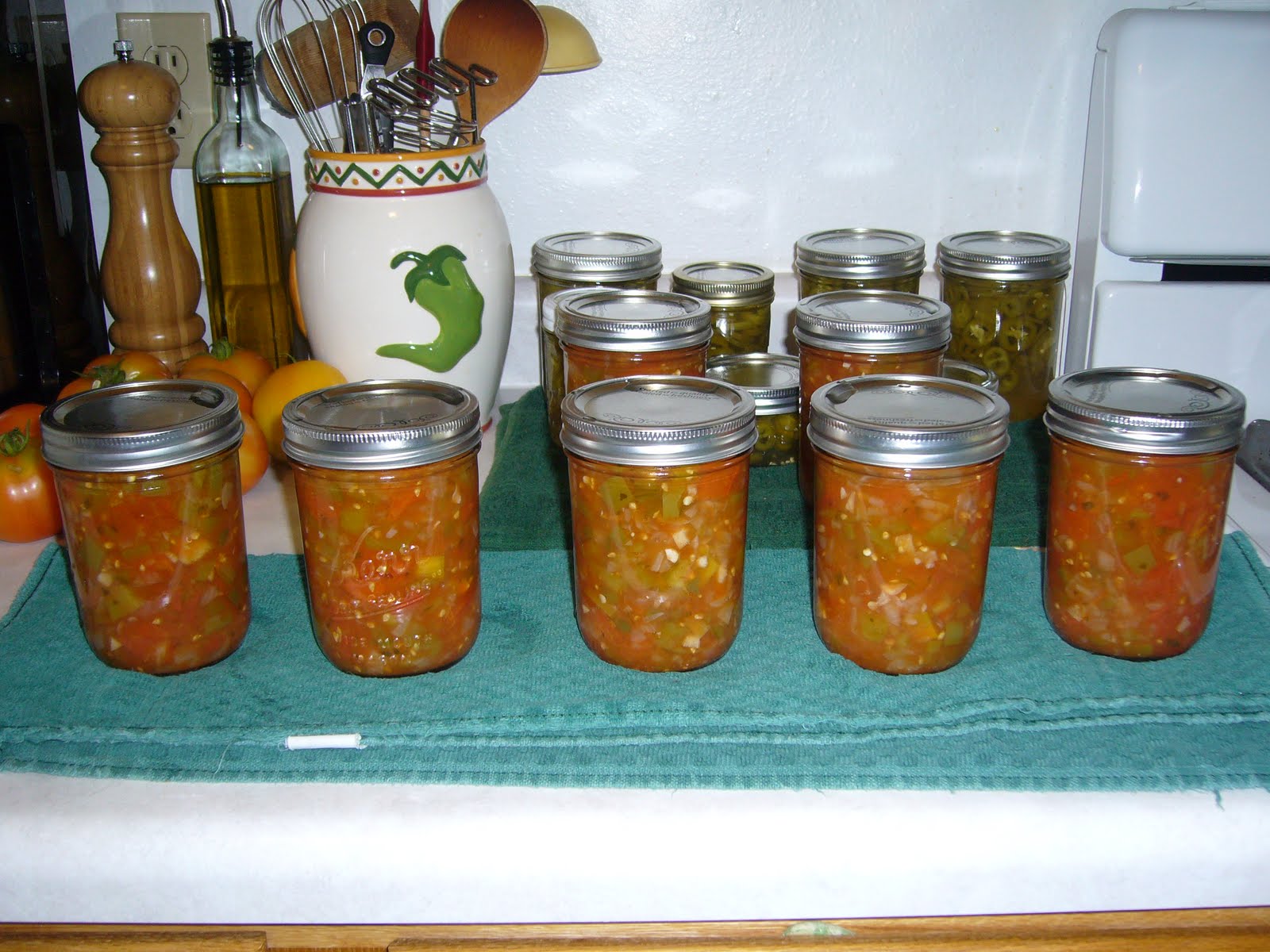
Canning Zesty Tomato Salsa


Zesty Salsa
~from the Presto Pressure Canner instruction booklet~

10 cups, chopped, seeded, peeled, cored tomatoes (about 6 pounds)
5 cups chopped and seeded long green peppers (about 2 pounds)
5 cups chopped onions (about 1 1/2 pounds)
2 1/2 cups chopped and seeded hot peppers (about 1 pound)
1 1/4 cups cider vinegar
3 cloves garlic, minced
2 tablespoons cilantro, minced
1 tablespoon salt
1 teaspoon hot pepper sauce (optional)

Combine all ingredients in a large saucepot, adding hot pepper sauce, if desired.  Bring mixture to a boil.  Reduce heat and simmer 10 minutes.  Ladle hot salsa into hot, sterilized jars, leaving 1/4 inch headspace.  Adjust two piece caps.  Process 15 minutes using the boiling water canning method.

Yield: 6 pints


Thursday, August 26, 2010

Homemade Plum Juice


The plums are ripe on the trees now and there is no way we can eat them all fresh before they go bad.  I don't want to see them go to waste so I have been making plum juice every evening this week.  I did the same with apples last year and we had delicious fresh tasting apple juice all winter.  It saves a considerable amount of money, we still buy orange juice once in a while during the colder months, but with our homemade juice in the pantry we don't buy nearly as much.  Plus I just don't like to see food go to waste.  Just like the abundant produce I gather from the garden, often it is more than we can eat so I save it for later using the method that produces the best results, whether that be canning, drying, freezing or fermenting.  These plums are best for juicing or making jelly.  I tried cutting them in half to dry some, but they are mostly juice inside with a tough, sour skin and they just turned to mush in my hand.  We have enough homemade plum, cherry and apple jelly to last us through the year, so juice it is.  

Making juice with a steam juicer, is a simple process, first the fruit is washed.


Then water is poured into the basin at the bottom of the juice steamer and the fruit is placed in the colander at the top of the steamer with a little sugar.  As the steam rises the fruit heats up and juice runs out of the colander into the pan below.


Steaming juice then flows out the attached hose and into a steralized jar, a prepared lid and band are placed on top and as the juice cools the lids seal and the juice is canned and ready to be stored for winter.

The fruit in the colander is reduced to a small pile at the bottom of the colander,  I place this in the compost bin.


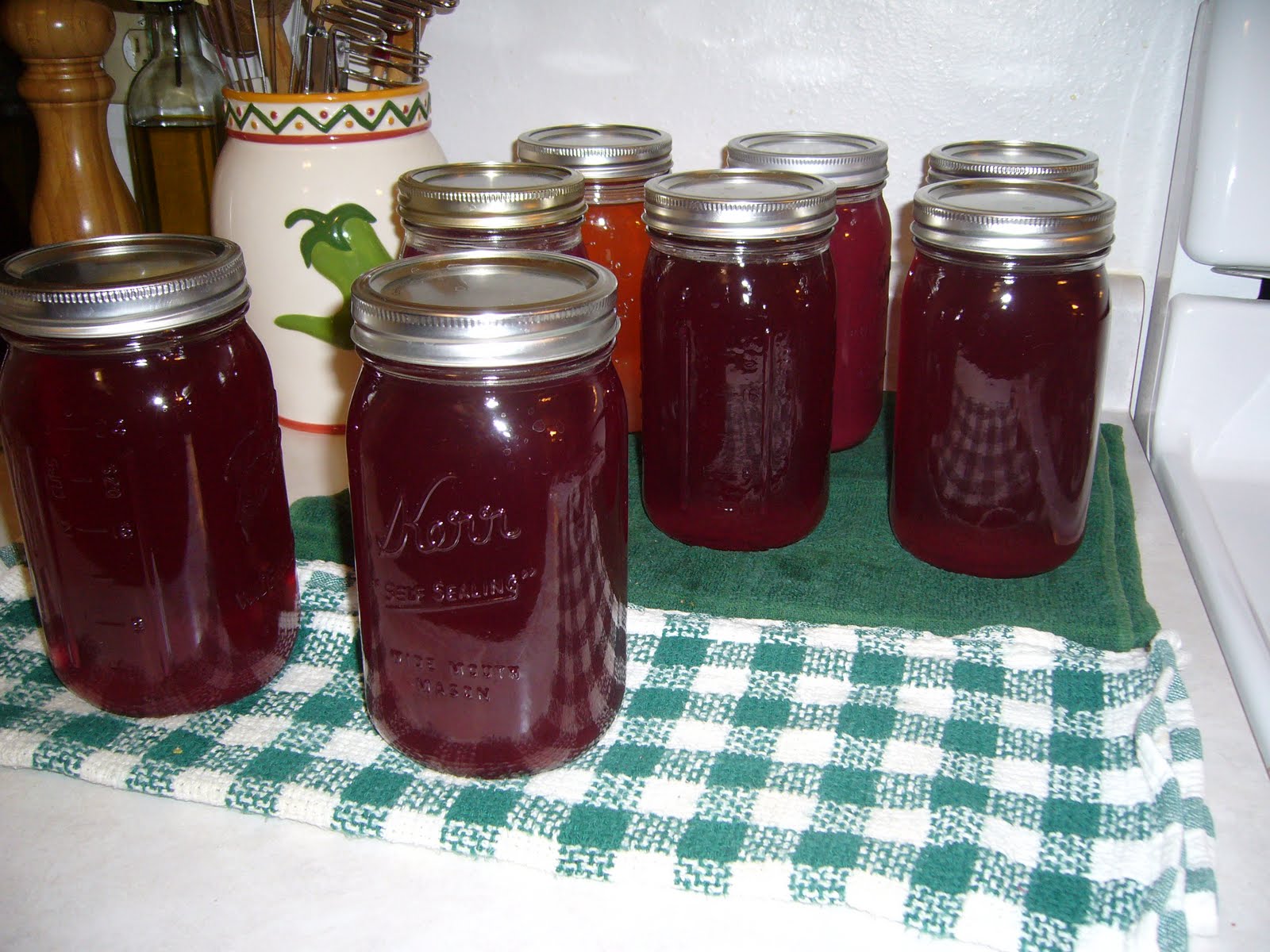
I am able to get between 3 and 4 quarts of juice from each batch of plums, apples don't provide quite as much juice, usually 2 to 3 quarts per batch.  I find it interesting how the color of the juice changes after it cools.  Above is the batch I did Tuesday evening just before I took the picture.  Below are the jars of juice I processed on Monday evening, going from red to pink as it cools.


Tuesday, August 24, 2010

Strawberry Walnut Bread


Strawberry Walnut Bread
Makes 1 9x5 loaf

2 eggs
1/2 cup vegetable oil
3/4 cup honey
1/4 cup sour cream or plain yogurt
1 teaspoon vanilla
1 cup whole wheat flour
1 cup white flour
1 teaspoon baking soda
1/2 teaspoon salt
1 1/2 cups chopped fresh strawberries
1 cup walnuts


Preheat oven to 325 degrees.  Grease and flour a 9 x 5 bread loaf pan.

Cream together the eggs, oil, honey, sour cream or yogurt and vanilla.  Stir in the flours, soda, and salt.  Fold in strawberries and walnuts.

Bake for 1 hour and 25 minutes or until a toothpick comes out clean.

Thursday, August 19, 2010

The "Root Cellar"


The potatoes have been dug and my garden is starting to look bare with the new large empty patch.  We have Yukon Gold and Dakota Jewel Red in every size, from very large one potato for two people to pearl onion size.  This should be enough potatoes to take us well into the winter, perhaps clear through to spring.


Homegrown potatoes need to be cured before they are stored so that their skins can be toughened up.  Spread them out in a protected area that is 60 to 70 degrees for one to two weeks.  Leave a layer of dirt on the potatoes, this extends their live, and never wash them before storing.  Place in a bin or burlap, but never plastic, then store them in a cold, damp, dark spot.  A root cellar is ideal.  High humidity and a temperature of 38 to 40 degrees is ideal, the temperatures in my cold storage are around 50 degrees, but they still keep fairly well.


This is our "root cellar", a small space in the basement that the prior owner built as a cold-storage room.  It is nothing special to look at, but it does the trick; there are no windows, it is insulated, has shelves and a door.  We store our squash, potatoes, onions, and apples in here.  Potatoes will keep in these conditions for 4 to 6 months.  Last year our garden potatoes kept well into January when we used the last of them up, they were not even soft or sprouting.  Keep an eye on them though, if one potato goes bad, perhaps from a bruised spot, pull it out or the rest will start to go.  Also, be sure not to store potatoes and apples close together or they won't keep well.