Over the weekend I was visiting with a woman who said she was 79 years old and had always lived a simple life. She and her husband farm still, along with their son. She has always had a garden and put up produce for winter use. They relied on that garden to see them through the winter. If it was a bad year for a particular vegetable they went without that year. There was no running to the grocery store for whatever they desired at any given moment. They planned ahead and made do with what they had.
She still gardens and preserves, we compared notes on how our gardens did this year and what produce we had put up. There is so much to learn from those who have lived a simple life for many years; they know how to do it. It is a way of life for them, not the latest trend, so they have settled into the routine and are comfortable with their life.
She agreed that this had been a good year for cherry tomatoes and told me she freezes them whole. I too have frozen cherry tomatoes whole and used them in pastas. However, she said she likes to use them in soups, the skins float to the top and can be picked out; a terrific idea.
Cabbage is a vegetable she grows or gets from her neighbor. To be able to make cabbage rolls in the winter, she said she blanches the cabbage leaves, cuts out the tough rib, rolls the leaves and places them in freezer bags. When she is ready to make her cabbage rolls, she thaws the leaves thoroughly, unrolls and stuffs them. Another idea I will be putting into practice. My cabbages have been used for making sauerkraut and one dish of cabbage rolls, however, the farmer's market will have cabbages that I can blanch and freeze, and we will still be eating from a local food source.

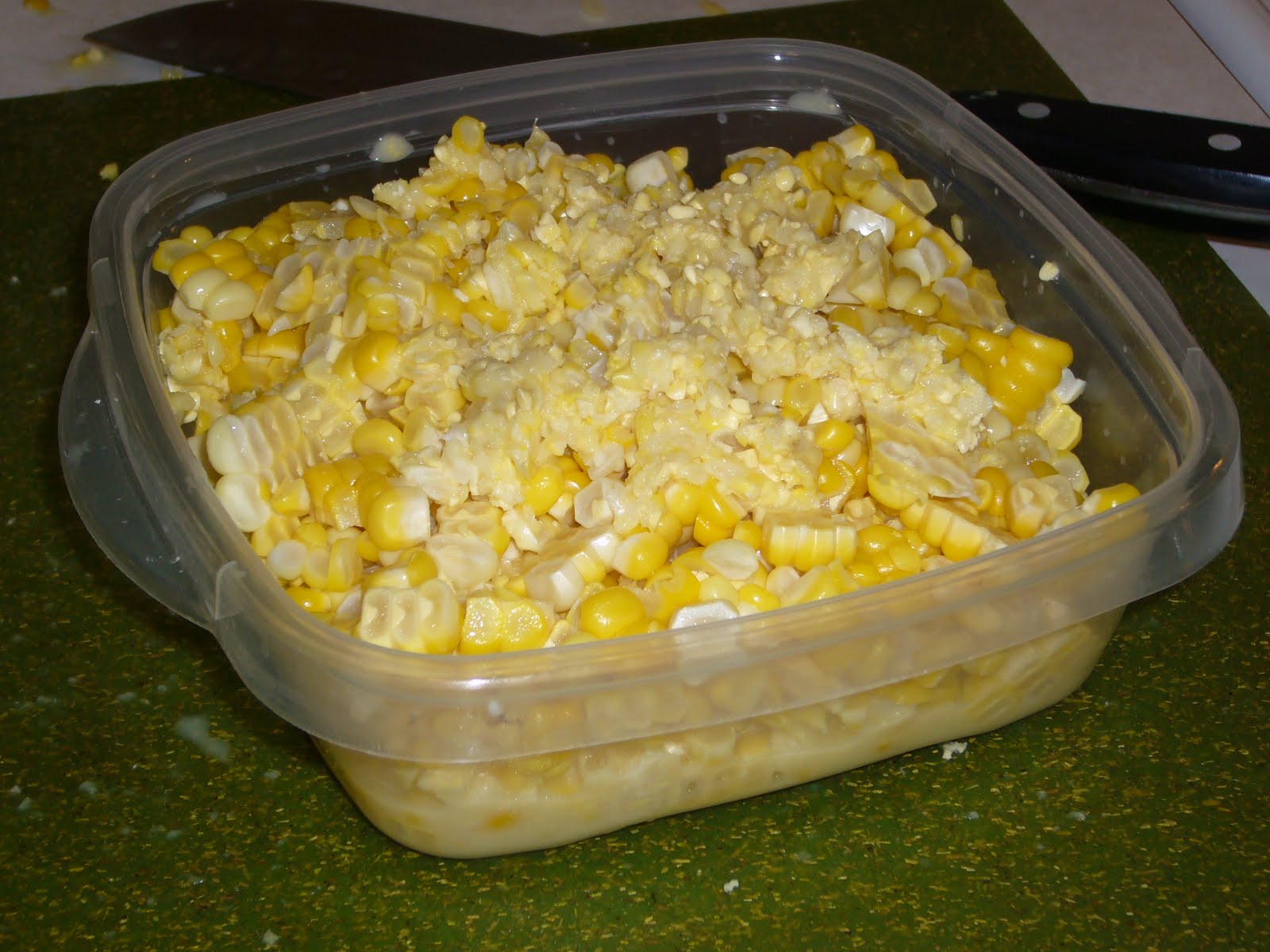
When I was young and living at home my mother taught me how to cream the corn as it was taken off the cob to be frozen for eating later. This is a simple process and tastes so amazing, even in the middle of winter, with the corn off the cob, it has the fresh taste of just picked corn. We don't have a lot of freezer space so leaving all the corn on the cob is not an option, but we don't mind. We prefer our corn on the cob grilled rather than boiled anyway, so in the winter this creamed corn is the way to go. Now this is not creamed corn like you buy in a can, not at all. In fact when I went to school I could not figure out why all the kids hated creamed corn, until I tasted canned cream corn for the first time, it was disgusting and nothing like what I called creamed corn.

Start by blanching the corn in boiling water for one minute, then plunging it into ice cold water to stop the cooking process, then you are ready to cut it off the cob, creaming it as you do so. To cream the corn while taking it off the cob simply set your knife slightly away from the cob, cutting about half to two-thirds of the corn kernal off the cob. Then go back to the cob and run your knife up the cob, scraping the bits of corn and milky juices off. This works very well if the corn is not overripe, there will be lots of milky juice.
Store the corn in freezer containers or bags in the serving size you need for your family; it will be frozen as one mass. Then when ready to cook just place the frozen or thawed corn in a pan and slowly heat, rarely do I need to add water, there is usually enough milky, sweet, juices. You will begin to crave corn like this, it is so good.
Living simply used to be the way most everyone lived. Life has become fast paced and fast food. Expecting to have what we want, when we want it. We have forgotten how to live simply and how good a way of life it can be. There are those among us who still live a simple life, we need to take the time to learn from their wealth of experience.